Industries
Industries
By Dusaw Team
Apartment building security comes down to who can open each door and when. This playbook shows property managers how to inventory doors, control credentials, use audit trails and close gaps at turnover.
Apartment building security is mostly a door problem. Cameras and patrols help you see what happened, but the locks, credentials and access rules on every door decide who can get in to begin with. For property managers, that makes door hardware and access control the part of the security program you can actually manage day to day: who holds a credential, what it opens, when it stops working, and whether you can prove who entered a unit or amenity room last Tuesday.
This guide walks through how to build an apartment complex security plan around doors and credentials, from the perimeter to individual units, and what to check before you choose a new apartment door lock system.
Most buildings have more access points than anyone on staff can list from memory. Start with a door inventory and group each door into one of four layers, because each layer needs different rules:
Perimeter: main entrances, garage and side doors, gates, and loading areas. These doors are used by everyone, so they need credentials that can be issued and revoked quickly.
Common and amenity spaces: mailrooms, package rooms, gyms, pool and roof access, laundry, lounges. Access should follow the lease, not a shared code.
Unit entry doors: the doors residents care about most and the ones with the highest cost when a key goes missing.
Back of house: maintenance shops, electrical and telecom rooms, leasing and management offices, storage. These should be limited to named staff and scheduled vendors.
For each door, record the door type and condition, whether it is fire-rated, the current lock, and who needs access. That list becomes the scope for any upgrade and the baseline for every audit afterward.
Security plans often focus on stopping a stranger from forcing a door. In practice, many incidents involve someone who already had, or could easily get, a way in. According to the Bureau of Justice Statistics report Victimization During Household Burglary, based on the National Crime Victimization Survey, offenders were known to their victims in 65% of violent burglaries, and strangers in 28%. That is a household-level national finding rather than an apartment-specific one, but it makes the point property managers already know: the people with the easiest path to a unit are former residents, roommates, guests and anyone who ever held a copy of a key.
Mechanical keys make that hard to manage. You cannot tell how many copies exist, a key never expires, and the only fix for a lost master is rekeying. Electronic credentials change the question from "who might still have a key?" to "which credentials are active on this door right now?", which is something staff can actually answer.
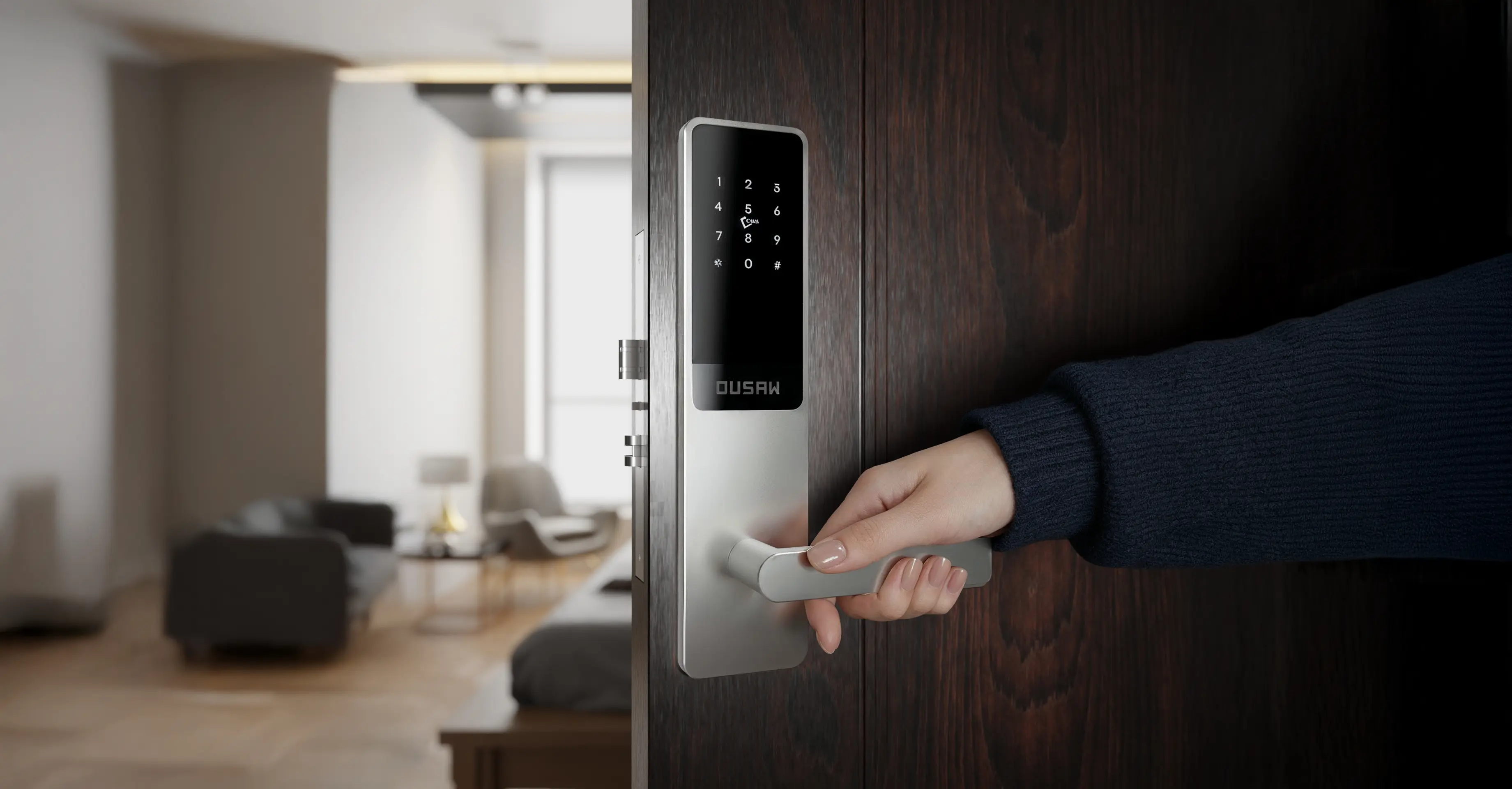
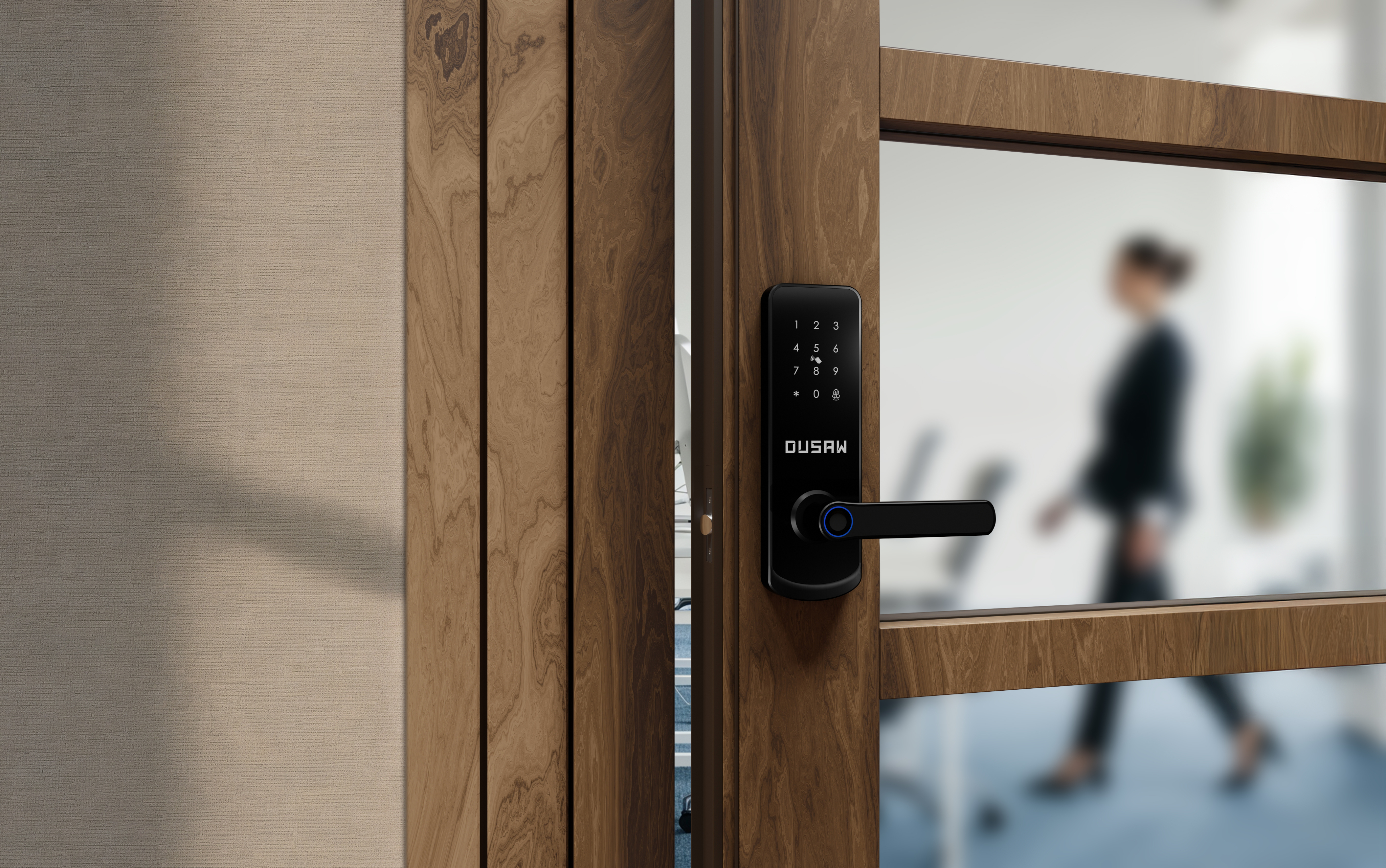
Apartment door security starts with the unit entry lock. When you evaluate security door locks for apartments, look past the finish and the keypad and check how the lock behaves as part of a system:
Revocable credentials: a lost card, fob or mobile key should be disabled in software, without replacing hardware.
Opening records on the lock: each lock should keep a record of who opened it and when, so you can reconstruct events after a complaint or incident.
Lock health reporting: battery level and status for every lock, with low-battery warnings sent to the property administrator before a dead battery turns into a lockout.
Listings and standards: UL Solutions describes UL 294, the Standard for Access Control System Units, as defining minimum construction, performance and operational requirements for electronic access control systems. Ask vendors which products carry which listings, and confirm what your local authority having jurisdiction requires.
Accessibility: the 2010 ADA Standards published by the U.S. Access Board require locks and other operable door hardware on covered doors to sit between 34 and 48 inches above the finish floor and to comply with the operable-parts rules, which call for hardware that works without tight grasping, pinching or twisting of the wrist. Lever trim makes this easier to meet on accessible units and common doors.
Retrofit fit: confirm door thickness, backset and existing cutouts. Locks that retrofit existing doors keep an occupied-building project from turning into a door replacement project.
For a hardware-focused comparison, see our guide to the best apartment door locks.
Electronic locks decide whether a credential is valid in one of two ways, and the difference matters more in apartments than in hotels.
In an encoded-card system, access rights are written onto the card at an encoder, and the lock checks what the card carries. It works well where every credential is short-lived and passes through a front desk, which is why hotels use it. Changing what a card opens usually means bringing the card back to the encoder.
With Dusaw Access software, cards are not encoded with access rights. Instead, each card's unique signature is registered on the specific locks it may open. Staff can reassign a card to another unit, change its validity, or disable it remotely without touching the card. Remote changes depend on Dusaw network hubs or gateways installed at the property. We compare both models in more depth in how electronic door locks work.
A Dusaw mobile key is a digital key for a specific lock with a start and end time. Residents can use it in two ways: in the Dusaw app, which unlocks over Bluetooth when they are next to the lock and works even without hubs, or as a link in the browser with no app, which locks or unlocks remotely and requires hubs at the property. For package rooms and lobbies, individual passcodes per delivery service keep entries traceable, so one misused code can be revoked without changing it for everyone.
An audit trail is only useful if someone looks at it. Build a few habits around the data your apartment door lock system already collects:
When a resident reports a problem, pull the opening records for that door before you respond.
Review staff activity logs for master and maintenance credentials on a regular schedule, and follow up on access outside scheduled work hours.
Check opening records on vacant units during make-ready, when contractors, cleaners and showings all overlap.
Watch the lock health dashboard so low batteries are handled as routine maintenance rather than emergency calls.
Make sure your lease and building policies explain that entry events are recorded and how the records are used.
Most access drift happens in the handoffs. At move-out, disable every credential tied to the departing resident and set anything left to expire at the lease end date. Give contractors time-limited access for the make-ready window only. For maintenance, replace shared master keys with scheduled, time-restricted access tied to work hours, and let a manager unlock remotely for an emergency or an unscheduled vendor so the opening is logged. Our article on multifamily keyless entry systems covers the full turnover workflow step by step.
Apartment building security changes must never compromise life safety. Corridor, stair and unit entry doors in apartment buildings are often fire-rated assemblies, and NFPA 80, the Standard for Fire Doors and Other Opening Protectives, governs how those openings are installed, inspected and maintained. Before adding or replacing hardware on a rated door, confirm with your fire protection consultant or local authority that the lock and any modifications are acceptable for that opening. Locks must also allow free egress from the inside. A propped stair or side door defeats both fire protection and access control, so treat propped doors as a security issue and address the reason people prop them, such as slow deliveries or a missing credential.
Once doors are managed in software, an administrator login can open every unit in the building. Treat those accounts like financial systems. NIST's Small Business Cybersecurity Corner notes that passwords alone are not effective at protecting sensitive business assets and recommends multi-factor authentication. Give each staff member a named account with only the permissions their role needs, remove access the day someone leaves the company, and avoid shared logins at the leasing office.
Week 1: complete the door inventory and mark fire-rated openings.
Week 2: list every active credential and master key, and disable anything tied to former residents, staff or vendors.
Week 3: pull opening records for back-of-house rooms and vacant units, and check lock battery and status reports.
Week 4: review admin accounts and multi-factor authentication, then write down the move-out, vendor and lockout procedures your team will follow.
If the review shows that your current hardware cannot revoke credentials, keep opening records or report lock health, that is the case for an upgrade. See how Dusaw supports owners and managers on our multifamily access control page, check our current integration partners, or request a quote for your property.
Credential and key control. Knowing exactly which cards, fobs, mobile keys and master keys are active on each door, and being able to revoke them quickly, prevents more problems than any single piece of hardware.
Look for credentials you can revoke in software, opening records on each lock, battery and status reporting, ADA-compliant lever trim, and listings such as UL 294 where your jurisdiction requires them. Confirm the lock retrofits your existing doors.
Retrofit electronic locks to the existing doors after checking door thickness, backset and cutouts, then replace shared master keys with individual, time-limited credentials for staff and vendors.
With an electronic apartment door lock system that keeps opening records, staff can see which credential opened a door and when. Your lease and building policies should explain that entries are recorded and how the records are used.
Yes, in the Dusaw app: residents unlock over Bluetooth when they are next to the lock, even without hubs. Opening a mobile key as a browser link, remote unlock and remote credential changes require Dusaw hubs or gateways at the property.
Many corridor, stair and unit doors are fire-rated openings covered by NFPA 80, and locks must allow free egress from the inside. Confirm hardware changes with your fire protection consultant or local authority having jurisdiction.