Industries
Industries
By Dusaw Team
Hotel door lock systems have traveled a long and interesting journey from the traditional brass key to the modern smart locks we see today. The shift from mechanical keys to electronic card access was...
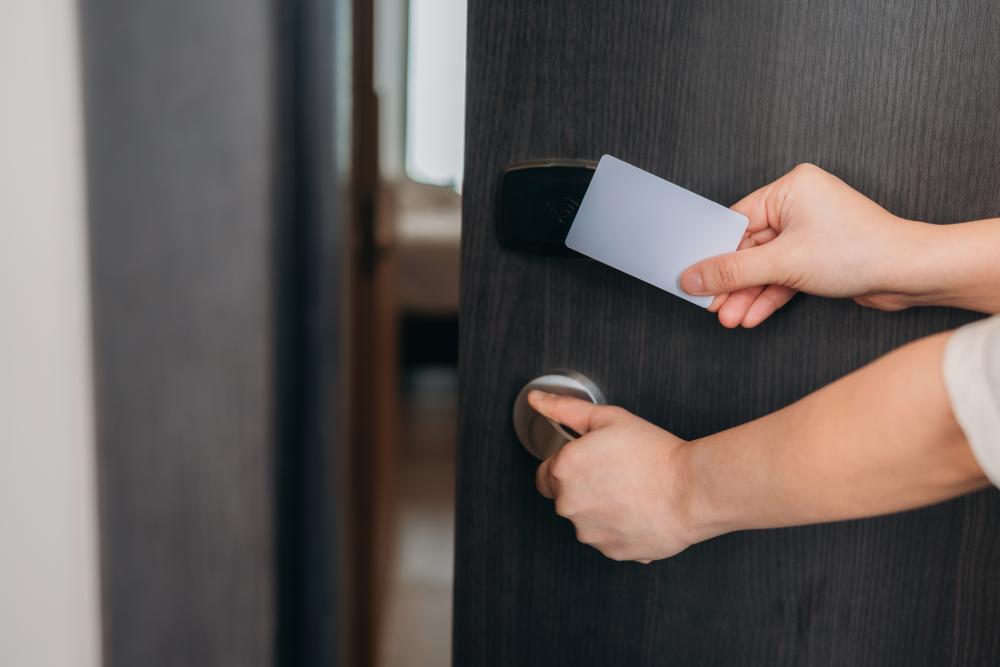
Hotel door lock systems have traveled a long and interesting journey from the traditional brass key to the modern smart locks we see today. The shift from mechanical keys to electronic card access was a revolutionary step, enhancing both security and convenience for hotel patrons. With the advent of card-based systems, hotels could easily reprogram locks for new guests, drastically improving room security and management.
The current evolution is the integration of smart locks, which are not only a technological leap but also a strategic step toward modern guest expectations. Leveraging these advanced systems allows hotels to offer keyless entry, which can be managed via smartphones. This feature is not only appealing to tech-savvy travelers but also reduces the physical burden on hotel staff, allowing them to focus on more personalized services. Such transformations highlight the importance of adapting to change while keeping security at the forefront.
Smart locks bring a myriad of benefits to the hospitality industry, shaping the future of hotel door lock systems in unprecedented ways. Firstly, they provide unparalleled convenience and security, eliminating the frequent issues and risks associated with lost keys. Guests can enjoy a seamless check-in experience, using their smartphones to gain access, which not only fosters a positive first impression but also caters to the increasing demand for contactless services.
Additionally, smart locks offer robust solutions for hotels when integrated into broader property management systems. With strong APIs, they provide property managers with a streamlined approach to access control, enabling them to supervise and adjust permissions effortlessly. Moreover, these systems allow for real-time monitoring and notifications, which are crucial for enhancing guest security and operational efficiency.
The introduction of smart locks also reflects a commitment to sustainability. By reducing plastic waste associated with traditional keycards and minimizing the need for constant replacements, hotels can align with eco-friendly practices. This eco-conscious appeal not only attracts a growing cohort of environmentally aware guests but also positions hotels as leaders in sustainable hospitality practices.
At the heart of hotel door lock systems lies the need for unyielding security and reliability. With increasing technological advancements, the demand for more secure and fail-safe systems escalates. Smart lock solutions provided by companies like DUSAW are designed to meet these exacting standards. Their resilient systems ensure that guests feel safe, offering robust hardware coupled with sophisticated software to prevent unauthorized access.
On the operational side, property managers rely on reliable systems to maintain smooth operations, reduce downtime, and ensure guest satisfaction. DUSAW’s track record in the industry speaks volumes about its commitment to delivering top-notch service, with many prestigious hotels and organizations already trusting their solutions. Such credibility is built on years of delivering products that not only meet but exceed security expectations.
Furthermore, the ability to integrate these systems seamlessly into existing infrastructures is no small feat. DUSAW’s API-driven approach ensures seamless integration, allowing hotels to adopt these cutting-edge solutions without overhauling their existing systems. It’s about marrying innovation with practicality, so property managers can focus on what they do best–providing excellent service to their guests.
For hotels looking to stay ahead in the competitive hospitality landscape, adopting innovative solutions like those offered by DUSAW is crucial. Their state-of-the-art hotel door lock systems are more than just a security measure; they’re a gateway to enhanced guest experiences. With a focus on simplicity and security, DUSAW smart locks offer a unique value proposition for hotels aiming to modernize their operations.
As a leader in the industry since 2014, DUSAW understands the multifaceted needs of property managers and consistently delivers products that reflect this insight. Their locks are designed with intuitive user experiences in mind, ensuring that both guests and staff can navigate the technology easily. While the hotel industry continues to evolve, companies like DUSAW play a pivotal role in setting the standards for innovation in security and guest satisfaction.
In today’s fast-paced world, embracing advanced hotel door lock systems is no longer a luxury but a necessity. Hotels that prioritize top-tier security solutions not only protect their assets but also enhance their brand reputation. Partnering with DUSAW provides a competitive edge in offering guests the peace of mind and modern conveniences they expect, marking a significant stride toward the future of hospitality. !Advanced Security Features with DUSAW
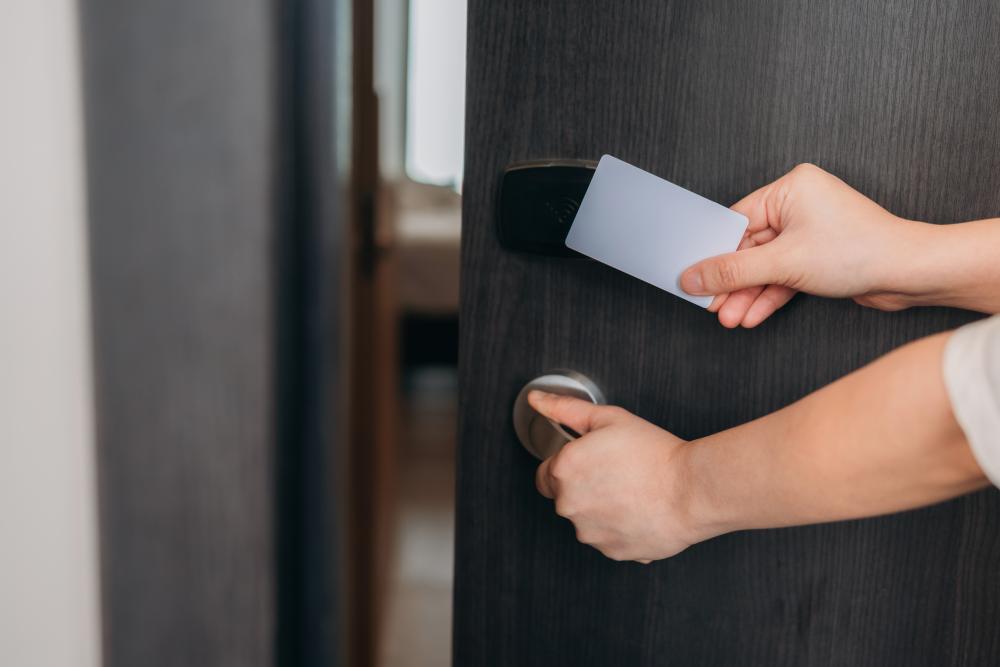
Once upon a time, guests were handed a bulky brass key attached to an oversized fob, a relic of hospitality days gone by. The advent of Hotel Key Card Door Locks revolutionized the hotel industry by offering a blend of security and convenience that was sorely needed. These card-based systems replaced traditional locks, reducing the risk of lost keys and improving guest experience. With the swipe of a card, weary travelers could enter their rooms with ease, bypassing the fumbling often associated with traditional keys.
Hotel Key Card Door Locks began as simple magnetic stripe cards, which were a significant leap forward, but not without their own set of challenges. Demagnetization and wear and tear on cards led to frequent replacements and frustrated guests. Fortunately, technology has marched on, and today, smart cards and even mobile access systems have stepped into the spotlight, vastly improving reliability and security in hospitality settings.
As an innovative leader, DUSAW has been at the forefront of this evolution, offering cutting-edge solutions that cater to modern demands for convenience and security. Their smart locks are not only robust but come equipped with advanced software, providing hotel managers with unparalleled control over guest room access. By leveraging the latest technology, DUSAW streamlines operations, making the life of a hotel manager significantly easier.
DUSAW has redefined the standards for Hotel Key Card Door Locks by integrating powerful software with durable hardware. This harmonious marriage offers customizable access levels that can be tailored to meet the unique needs of any property. Guests can now enjoy the peace of mind that comes from knowing their hotel door is secured by one of the most reliable providers on the market.
The integration of DUSAW’s API allows property managers to seamlessly incorporate Hotel Key Card Door Locks into existing management systems. This not only simplifies day-to-day operations but also enhances security protocols. Gone are the days when replacing lost keys was a logistical nightmare; DUSAW’s smart locks ensure that security is never compromised.
By moving beyond traditional locking mechanisms, DUSAW empowers hoteliers to embrace a future where convenience doesn’t sacrifice security. With features like mobile app access and customizable entry settings, DUSAW is more than just a lock provider – it is a partner in safety and innovation.
Hotels worldwide, including prestigious names like Parker New York and Resorts World Catskills, have embraced DUSAW’s solutions. This widespread trust is a testament to the company’s commitment to quality, ensuring that every guest can unlock their room with confidence and ease.
As technology accelerates at breakneck speed, the future of hotel security looks promising, especially with innovation leaders like DUSAW steering the ship. The potential for Hotel Key Card Door Locks extends beyond mere room access; imagine a system where guests are greeted by personalized room settings as soon as they unlock the door. Such advancements are not far-fetched, and with DUSAW’s ongoing dedication to technological excellence, they are well within reach.
DUSAW remains dedicated to pushing the envelope, ensuring that their products not only meet current demands but anticipate future needs. By fostering partnerships with hotels, multifamily buildings, and healthcare facilities, DUSAW is setting the stage for a new era of smart locks that enhance both security and guest satisfaction.
With an eye on the horizon, DUSAW is focused on integrating more eco-friendly solutions without compromising on security or convenience. This commitment positions them as not just a vendor but a visionary in the world of Hotel Key Card Door Locks.
In a world where security is paramount, the evolution of Locks For Hotel Doors has taken spectacular strides. With the rise of smart technology, traditional locks have been challenged by innovative solutions that promise enhanced safety and convenience. The shift towards smart locking systems offers hotels the ability to integrate technology seamlessly, ensuring that both guests and property remain secure. These advanced smart locks, like those offered by DUSAW, play a pivotal role in reshaping hospitality security standards.
Smart locks bring a plethora of benefits to the table, from providing keyless entry to fortifying access control systems. Property managers can effortlessly grant or revoke access, making managerial tasks much more streamlined. The flexibility offered by these systems allows hotels to adapt quickly to changing needs, ensuring guests can enjoy their stay with minimal hassle. DUSAW’s commitment to innovation offers a keyless lifestyle that aligns perfectly with modern expectations.
Integrating smart locks into existing systems might seem daunting, but with trusted partners like DUSAW, the process is straightforward, ensuring that security is never compromised. Their API integration capability ensures that the addition of smart locks doesn’t disrupt existing operations but rather enhances them. This seamless experience is what sets DUSAW apart, ensuring property managers can focus on delivering exceptional guest experiences.
Smart locks for hotel doors come with myriad features that cater to both security and convenience. A standout feature is the ability to track entries and exits, allowing management to have a clear picture of room occupancy and guest movement. This level of insight is invaluable for operational efficiency and guest satisfaction. Moreover, the ability to issue digital keys means lost physical keys are a thing of the past, reducing operational hiccups.
Hotels can customize access experiences, providing guests with unique entry codes or smartphone app access, adding a personal touch to their stay. The seamless integration with room management systems further enhances the guest experience, ensuring that their needs are met with precision and care. DUSAW’s smart locks are designed to enhance the hospitality experience through powerful yet flexible software solutions.
One must also consider the durability and reliability of these smart locks. Constructed from robust materials, they offer an additional layer of physical security, designed to withstand tampering and environmental challenges. This confidence in the product’s durability is why thousands of hosts globally trust DUSAW’s solutions for their properties. With DUSAW, investing in smart locks means investing in peace of mind.
The hospitality industry is ever-evolving, and embracing technological advancements is key to staying ahead. Smart locks for hotel doors, like those from DUSAW, not only simplify security management but also future-proof the property against emerging threats. By leveraging the latest software and technology, hotels can offer guests cutting-edge security solutions that meet and exceed modern expectations.
What sets DUSAW apart is their unwavering commitment to customer satisfaction, offering tailored solutions that address the unique needs of each property. The focus on both hardware and software ensures a harmonious blend of security and usability, providing a seamless transition to a smarter way of managing hotel doors. Their prestige and trust, evidenced by installations in renowned locations, speak volumes about their reliability and the quality of their solutions.
By choosing DUSAW, property managers not only enhance security but also enrich the guest experience, creating a welcoming environment where safety and convenience go hand in hand. The move to smart locks is not just a trend; it is a necessary step towards a more secure and efficient future in hospitality. Explore DUSAW’s offerings and join the ranks of satisfied customers who have reaped the benefits of innovative security solutions.
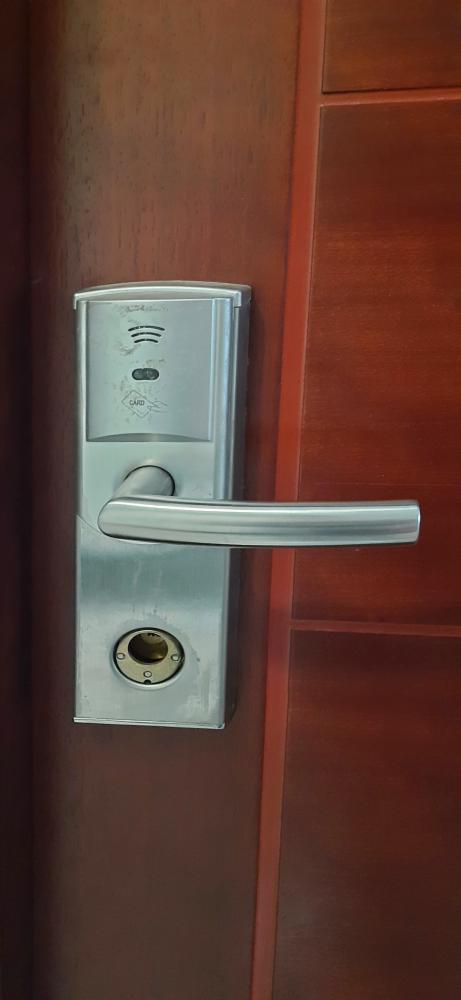
Hotel doors may use a mechanical key and cylinder, a magnetic-stripe card reader, contactless RFID, a keypad, or an electronic smart lock. These formats differ in how the guest presents a credential and how the property manages it; “smart lock” does not identify one reader type. Compare the door hardware, guest workflow, staff responsibilities, and access needed for shared areas.
The source guides describe swipe cards with magnetic stripes, tap-to-read RFID cards or devices, NFC-capable phones, Bluetooth mobile keys, PIN codes, and biometric readers such as fingerprint or facial recognition. A reader checks the credential against the door’s access rules before releasing the latch. Not every model supports every method, so confirm which cards, phones, wristbands, or codes the exact system accepts.
Mechanical keys are familiar, but loss or non-return may require replacement or a cylinder change. Electronic credentials can be issued for a room and stay, then replaced or disabled when access changes. Networked systems may accept remote permission updates and provide activity records; offline locks can make local decisions and synchronize later. Compare these workflows, not just the appearance of the lock.
Source articles describe encrypted credentials, authorization checks, tamper alerts, access logs, and staff permission levels as features to evaluate. Ask how a lost card is revoked, what events the lock records, who can review those records, and whether room, staff, and shared-area permissions are separate. Verify these capabilities in the proposed configuration rather than assuming every electronic lock offers the same controls.
Electronic locks add software, power, and sometimes network dependencies alongside physical hardware. The source material raises concerns about unauthorized access, technical faults, privacy, and data handling; it does not support treating any lock as risk-free. Review credential protection, software updates, connection failures, and the property’s response to suspected misuse or a system fault.
A lock is one element of hotel security. Set procedures for guest-room entry, staff and housekeeping access, lost credentials, emergency entry, and escalation of a malfunction. Train front-desk and maintenance teams to confirm identity and permissions before changing access. Explain the room’s actual secondary locking features rather than promising that an electronic credential alone guarantees safety.
Plan installation around room availability and daily operations. Survey the doors and existing hardware, confirm the chosen model’s physical requirements, and identify the rooms and shared entrances in scope. Coordinate setup of readers, encoders, software, and staff accounts before launch. Test check-in, a lost card, a stay extension, and a room change before wider deployment.
Compatibility has physical and operational parts: the lock must suit the door and its hardware, and its credential and software interfaces must fit hotel workflows. Confirm support for the current PMS, any required API or gateway, card encoder, mobile credential, and shared-area reader. Document which functions need a connection and which work locally at the lock.
Maintenance guidance in the sources includes periodic lock inspections, battery checks and replacements, appropriate cleaning, and software or firmware updates. Track reader, latch, credential, and connectivity complaints so recurring faults are not mistaken for one-off guest errors. Establish who checks low-battery alerts, reports worn components, and issues a replacement credential during troubleshooting.
A PMS connection can link reservations to room assignment and credential issuance, while checkout or a changed stay can update the access window. API and hotel-system connections may also coordinate staff permissions and shared-area access. Ask whether actions happen automatically or need a staff step, how errors surface, and test check-in, an extension, cancellation, and room reassignment.
Access-management tools may let staff grant, change, or revoke permissions remotely and review entry records. Multi-level permissions can distinguish guest rooms from staff-only or restricted areas; emergency overrides are described in the source guides but must be confirmed for the actual lock. Define who may make each change and what staff do when the management tool is unavailable.
Contactless cards and supported mobile credentials can make entry straightforward without a traditional key handover. A guest who loses a card can receive a replacement credential, and mobile access may help guests who prefer a phone. These conveniences depend on the reader, device, and check-in process, so provide an alternative for guests who cannot or do not wish to use a phone.
Electronic permissions can simplify issuing room access, changing a stay, and managing different staff roles. Access records may help review a reported entry, while shared-area permissions can be administered separately from guest-room access. The source guides also describe occupancy information as a possible planning input; these functions depend on system configuration and staff training.
Compare systems against door types, guest volume, credential preferences, integration needs, staff capacity, security procedures, and support. Ask for a demonstration of routine tasks and a list of included readers, software, gateways, and credentials. Supplier questions should cover implementation, training, updates, and troubleshooting; a feature list alone does not show hotel fit.
Budget for hardware, installation, encoders or gateways, software, support, maintenance, and ongoing access administration. One source FAQ gives broad examples from a few hundred dollars per lock to thousands for more advanced systems; it is not a property quote or universal price. Compare total costs with the hotel’s current key replacement and access-management work.
The source guides discuss mobile credentials, NFC, biometrics, connected devices, and automated access as developing options. Assess these against guest needs, door compatibility, privacy, and support rather than assuming every property should adopt them. Ask how a proposed system can accommodate future credential or software changes without relying on an unverified roadmap.
Some source material describes access and occupancy information as inputs for energy planning and property operations. Identify which events and occupancy data are collected, how they are interpreted, and who may access reports. Consider data minimization alongside any claimed efficiency benefit. For a wider plan, see Dusaw’s hotel access control system and the hospitality guides.
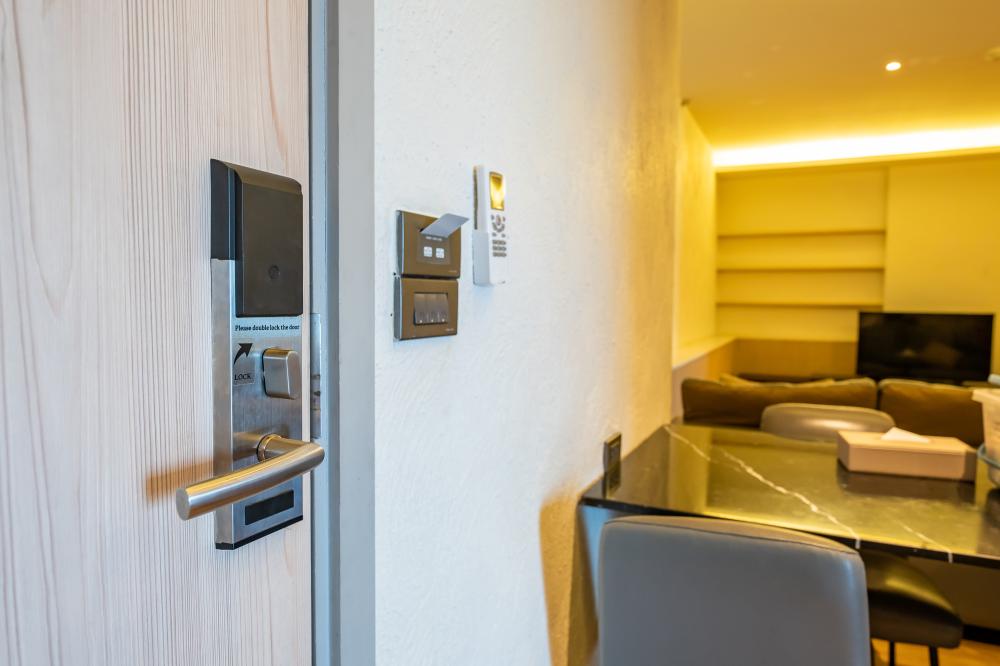
Preventing unauthorized access to your hotel room involves a combination of vigilance and utilizing available security features. Always engage all locking devices like deadbolts or door chains when inside. Additionally, make sure your room doesn’t have any external vulnerabilities, such as unlocked windows or patio doors.
Hotels today are increasingly turning to smart locks as their go-to security solution. These advanced systems replace traditional mechanical locks and key cards with keyless entry options that enhance both security and convenience. Smart locks, like those offered by DUSAW, can be operated via smartphones, allowing guests to access their rooms effortlessly.
Smart locks, like those from DUSAW, offer a myriad of advantages for both guests and hotel managers. For guests, the convenience of using their smartphones as digital keys eliminates the hassle of physical keycards and provides a seamless check-in experience. Imagine arriving after a long flight and heading straight to your room without stopping at the front desk–it’s a game-changer for weary travelers.
Integration is one of our top priorities at DUSAW. Our keyless smart locks are designed to seamlessly integrate with existing hotel systems through versatile API connections. This integration means that property managers don’t have to overhaul their current infrastructure to enjoy the benefits of smart locks.
The cost of a hotel door lock system can vary widely based on the complexity and features of the lock chosen. Basic electronic locks might range from $150 to $300 per unit, while more advanced smart lock systems, like those provided by DUSAW, can be priced from $300 to $500 or more per door, depending on the specific requirements and integrations involved. These systems usually include advanced software that allows property managers to control access and monitor security in real time.
Hotel key card door locks improve security by reducing the risk of unauthorized access associated with traditional keys. These systems can easily be reprogrammed, ensuring that previous guests cannot use old cards to gain entry. DUSAW has been at the forefront of improving these systems by integrating smart card technology that enhances reliability and security levels further.
DUSAW’s smart locks offer advanced security features such as customizable access levels, real-time monitoring, and mobile app integration, providing robust solutions for varied security needs. These locks provide property managers with granular control over who has access to specific rooms, when, and for how long. Guests benefit from the added convenience of mobile keys and secure entry.
Hotel key card systems significantly elevate guest experiences by streamlining access and improving convenience. Unlike traditional keys, key cards are easy to carry and replace if lost, preventing the inconvenience of key retrieval or lock changes. At DUSAW, our key card systems integrate seamlessly with property management solutions, offering guests the flexibility of contactless entry via smartphones.
When it comes to securing a hotel, the ideal door lock system should be reliable, user-friendly, and high-tech. DUSAW’s smart locks uniquely blend advanced software with robust hardware, making them an unparalleled choice in the hospitality industry. Their locks are not only secure but also seamlessly integrate with various hotel management systems, providing real-time control over access and enhancing both security and guest experience.
The evolution of hotel door locks reflects the ongoing advancements in technology and the increasing expectations for security and convenience. Initially, hotels relied on basic mechanical locks, which were replaced over time by electronic keycard systems. Today, the industry standard is moving towards smart locks that use RFID, Bluetooth, and cloud-based monitoring systems.
A portable door lock is a compact device that can be easily carried and used to enhance the security of a hotel room. At DUSAW, our portable locks are designed for ease of use and offer an extra layer of protection by restricting external access when you’re inside the room. These locks are particularly useful for travelers who seek additional security beyond the standard hotel lock system.
Hotel security is paramount, especially in ensuring that guests feel safe and comfortable. From our experience at DUSAW, enhancing the security of a hotel door begins with integrating smart lock systems that offer both robust hardware and advanced software solutions. Our smart locks, for instance, leverage biometric technology and encrypted entry codes, which significantly reduce the risk of unauthorized access.
Modern key card systems, like those offered by DUSAW, bring a myriad of benefits to hotels, including enhanced security, greater efficiency, and improved guest satisfaction. These systems offer flexibility, as they can be reprogrammed instantly if a card is lost, minimizing security risks. They also integrate with hotel management systems, allowing for seamless access control and energy management.
Keyless hotel door locks enhance security significantly over traditional systems by eliminating physical keys, which can be lost, stolen, or copied. With DUSAW’s keyless solutions, each entry is logged, providing a comprehensive audit trail that enhances security accountability. Our systems also enable customized access privileges and can be updated remotely, providing a dynamic response to security needs.
At DUSAW, we revolutionize hotel door lock systems by integrating state-of-the-art smart lock technology that provides both security and convenience. Our locks feature advanced biometric sensors, electronic keycards, and seamless smartphone integration, making access control more efficient and secure. By offering real-time access logs and easy API integration, hoteliers can monitor and manage security with precision.